

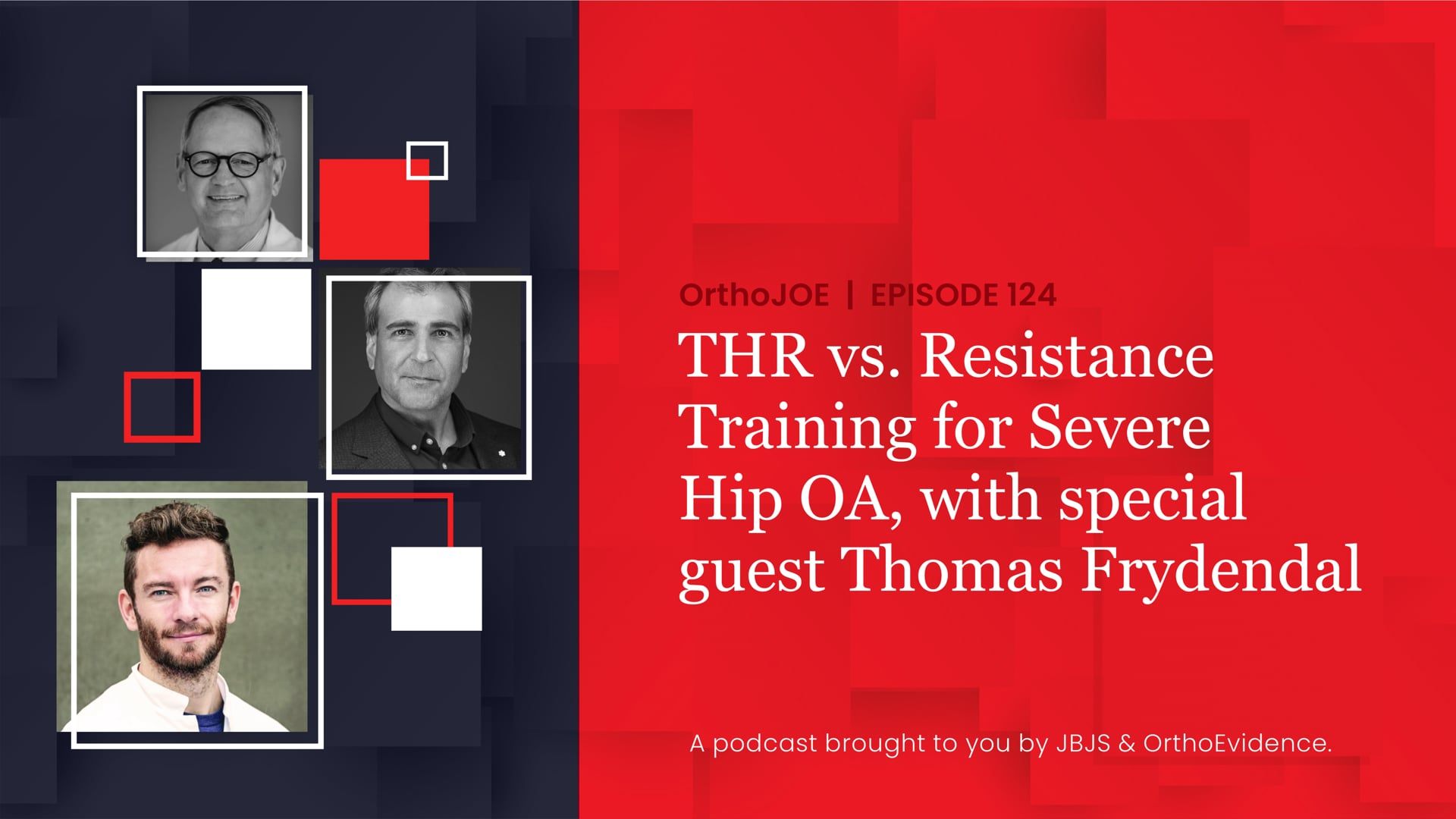
THR vs. Resistance Training for Severe Hip OA, with special guest Thomas Frydendal.
Unlock this Podcast
You have access to 4 more FREE articles this month.
Click below to unlock and view this Videos
Unlock Now
Critical appraisals of the latest, high-impact randomized controlled trials and systematic reviews in orthopaedics
Access to OrthoEvidence podcast content, including collaborations with the Journal of Bone and Joint Surgery, interviews with internationally recognized surgeons, and roundtable discussions on orthopaedic news and topics
Subscription to The Pulse, a twice-weekly evidence-based newsletter designed to help you make better clinical decisions
Exclusive access to original content articles, including in-house systematic reviews, and articles on health research methods and hot orthopaedic topics
Or upgrade today and gain access to all OrthoEvidencecontent for as little as $1.99 per week.
Already have an account? Log in

Thomas Frydendal
PT, MSc, PhD
View More

This episode centers on a rare and methodologically ambitious surgical-versus-rehabilitation RCT in severe hip osteoarthritis, featuring Danish physiotherapist-researcher Thomas Frydendal. The discussion frames the long-standing clinical tension between “exercise can solve it” and “arthroplasty is definitive,” and positions the trial as a pragmatic tool for shared decision-making rather than professional turf. In 109 patients with severe radiographic OA and marked pain/disability, total hip replacement produced a clinically meaningful advantage over a 6-month resistance-training program on the Oxford Hip Score at the 6-month primary endpoint (≈11.4 points on a 0–48 scale, exceeding a ~5-point threshold for clinical relevance), with planned longer follow-up and anticipated crossover acknowledged as a design challenge. Beyond results, Frydendal details the human cost of running a decade-long trial during a PhD, and the professional upside—credibility, network expansion, and academic recognition—while reinforcing a persistent, patient-question–driven research ethos. The conversation closes by linking this work to his next multicenter trial testing whether supervised physiotherapy adds benefit beyond patient education alone in milder OA.

DISCLAIMER
This content found on this page is for informational purposes only and is not intended to be a substitute for professional medical advice, diagnosis, or treatment. If you require medical treatment, always seek the advice of your physician or go to your nearest emergency department. The opinions, beliefs, and viewpoints expressed by the individuals on the content found on this page do not reflect the opinions, beliefs, and viewpoints of OrthoEvidence.
0 of 4 monthly FREE articles unlocked